
Guide two
Coastal Stargazing
A coastline can offer a wide, flat horizon and darker skies out over the water. It also brings tides, cliffs, wind and spray. Plan for both and the coast becomes a superb observatory.
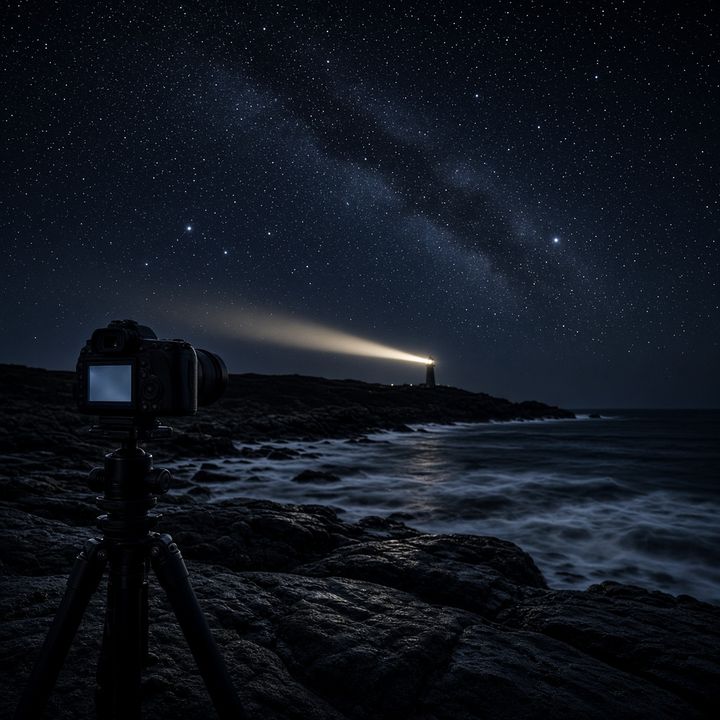
Check the tide, every time
Tides change the shape of a beach quickly, and it is easy to lose track of time under the stars. Look up the tide times for your exact spot before you leave, and know which way the tide is moving. Spring tides, with the biggest rise and fall, happen around the new and full Moon, which means the darkest nights of the month often come with the highest tides.
Choosing a spot
- Face away from towns. Look for a stretch of coast where the sea, not a harbour or resort, fills your view.
- Know the access. Visit in daylight first, so you know the path, the hazards and where to park legally.
- Avoid cliff edges. Edges can be unstable and hard to judge in the dark.
- Look for shelter. A dune, wall or hollow cuts the wind, which makes cold nights far more comfortable.
What to bring
| Item | Why |
|---|---|
| Warm layers, hat and gloves | Coastal nights feel colder than inland, especially in wind |
| Red torch and a spare | Safe walking without ruining your night vision |
| Blanket or reclining chair | Looking up for long periods is easier lying back |
| Hot drink | Keeps you out longer and happier |
| Lens cloth and a cover | Salt spray and dew coat optics quickly |
| Charged phone | Tell someone where you are going and when you will be back |
Low-horizon targets
A clear sea horizon is perfect for things that never climb high: a young crescent Moon after sunset, Venus or Mercury in twilight, and southern constellations that skim the horizon from northern latitudes.
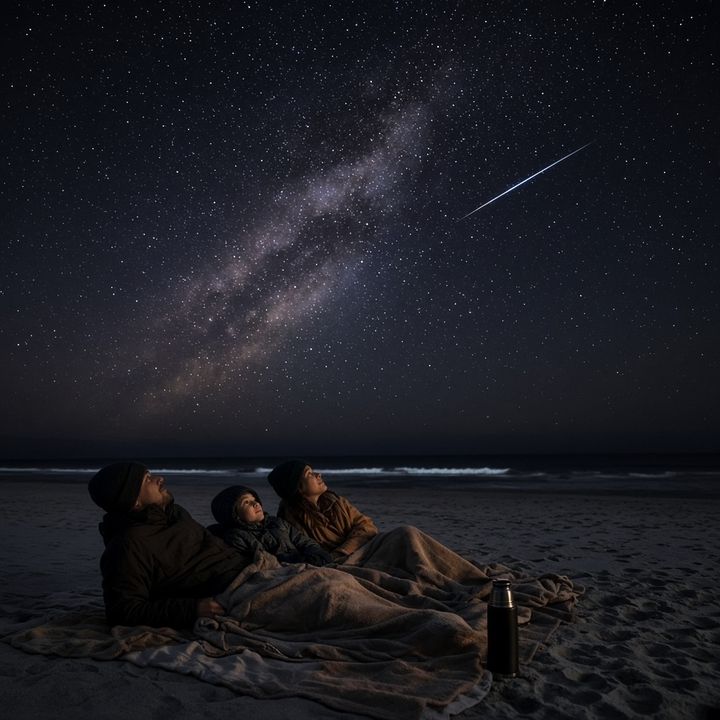
Leave no light behind
Keep headlights and torches dipped, respect other people enjoying the dark and take everything home with you. Coastal wildlife, including nesting birds and seals, can be disturbed by noise and light.
Conditions at the coast change quickly. Check tides and weather, follow local signs and do not take risks on rocks, cliffs or beaches cut off by the tide. In the UK and Ireland, call 999 or 112 and ask for the Coastguard if someone is in trouble at the coast.